A Designer's Take on a Medical Embroidery Vector
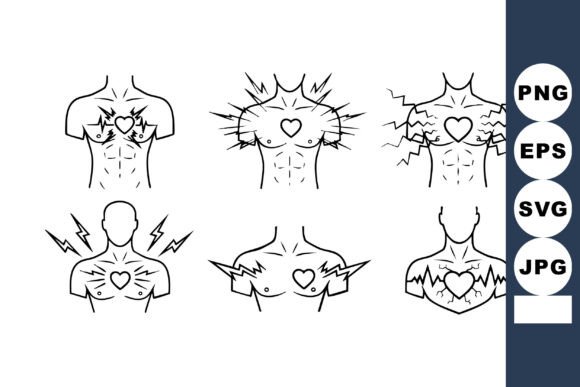
When I saw this vector illustration of male chest pain stages, my first thought was that it felt quietly powerful. It's a medical concept rendered in a simple, clear black outline style, with six stages represented by heart symbols and pain lines on an upper body. There’s no cartoonish exaggeration or heavy drama—it’s almost diagrammatic. This creates a mood of sober awareness rather than alarm. For an embroidery designer, that’s a useful starting point. The visual personality is direct and informational, which tells me it belongs to projects meant to communicate, educate, or express solidarity, rather than purely decorate.
Where This Design Finds Its Stitching Home
As a professional reviewing this for real work, I immediately pictured it on custom apparel for healthcare workers, students, or advocates. A nicely embroidered sweatshirt or a tote bag for a nursing student could be a fantastic, personalized gift. The clean lines would translate well to a sturdy cotton tote bag design, where the graphic could be central and bold. I also considered it for a heartfelt gift—perhaps a pillow cover or blanket for someone recovering from a cardiac event, making the medical concept personal and tactile. For craft business owners, especially those in niches like medical awareness or educational products, this could be a strong addition to a small shop product line.
Thinking commercially, an embroidered patch featuring this design could be very compelling. Patches allow for dense, crisp stitch definition, and this vector’s clear stages would read well. It could be applied to caps, aprons, or even as a standalone item for craft fair products. For apparel decorators and boutique branding, using it on a dark fabric like a black sweatshirt with a contrasting white or silver thread could create a sophisticated, professional look that builds customer trust through its clean execution.
The Practicalities of Stitching This Vector
In real-life embroidery situations, the simplicity of a black outline design is a blessing and a curse. The blessing is stitch clarity. With no overly dense fill areas, you’re likely looking at a design that uses running stitches or perhaps some satin stitch for the heart symbols. This means it could stitch out relatively quickly and cleanly on various fabrics, from baby clothes (if the theme is appropriate for the context) to kitchen towels for a medical-themed set. The potential curse is in the small details. Those pain lines and the differentiation between six stages rely on fine lines. On textured fabrics or stretchy fabric, those details could get lost or distorted.
You’d want to be careful with very small hoop sizes. Trying to cram this onto a tiny baby item area might compress the stages and muddle the message. Curved surfaces like caps also pose a challenge—the layout is linear and horizontal across a chest, so adapting it to a curved cap front would require thoughtful repositioning, possibly focusing on just one or two of the stages as a accent.
Navigating the Tricky Terrain for Best Results
This design affects product value and handmade presentation by its very subject matter. Stitched well, it conveys a sense of care and precision, elevating a simple garment into something with purpose. However, it requires a confident execution. On thin fabric without proper stabilizer, it could pucker. On dark fabric, if you stick with the suggested black outline, you’d need to ensure your thread color has enough contrast—perhaps a very dark gray on black, or even switching to a metallic thread for visibility. Always test the design on scrap fabric first.
My practical embroidery designer notes for using this would be: review the stitch density in your software before committing. Check how those pain lines are rendered—are they single-run stitches or thicker? This will influence the final look. Inspect the small details around the heart symbols. Then, test it in black and white mockups on both light and dark backgrounds to gauge its visual appeal. For commercial embroidery or digital product sellers offering this as part of a bundle, confirming the licensing for selling finished items is an absolute must before you proceed.
Turning a Vector into a Resonant Finished Product
Ultimately, the success of this embroidery project hinges on context. As a designer, I see its strength in giftability and recognition when paired with the right product. A beautifully embroidered tea towel in a home recovering from a health event, or a pillow cover in a clinic’s staff room, could be deeply meaningful. For Etsy sellers and creative entrepreneurs, it could anchor a listing for “medical awareness gifts” or “educational embroidery.” It’s not a generic holiday embroidery design, but for a specific holiday like World Heart Day, it could be perfect.
To maximize buyer engagement, present it in your printable mockups on products that make sense—a lab coat, a sturdy apron, a minimalist tote. The design’s professionalism comes from its clean style, so let that shine in your presentation. Avoid hype; let the design’s own clear communication speak for itself. For your craft business, this is a design asset that requires thoughtful application, but in that thoughtfulness lies its real value. It’s a vector that, when stitched with care, turns into a product that matters.